A reader once asked me which version of me my children know best: the Danish-speaking version or the version who speaks my mother tongue.
I gave a quick answer at the time, but the truth is more complicated.
My children’s mother tongue is Danish, not mine.
That still feels a bit strange to say.
I am their mother, but when it comes to language, they grew up with a first language I had to learn, and there is a story behind it.
I Was Learning Danish While Raising Them
I didn’t arrive in Denmark fluent in Danish and then have children once I felt settled.
It happened the other way round.
I was still learning Danish while raising my children. I was still working through grammar, learning new words and working out how people actually spoke to each other, while also trying to be a present and capable mother.
At some point, I started speaking mostly Danish to my children at home.
Part of the reason was practical. I wanted them to have strong Danish because this was where they were growing up, going to school and building their lives.
But there was another reason, too. I needed to practise.
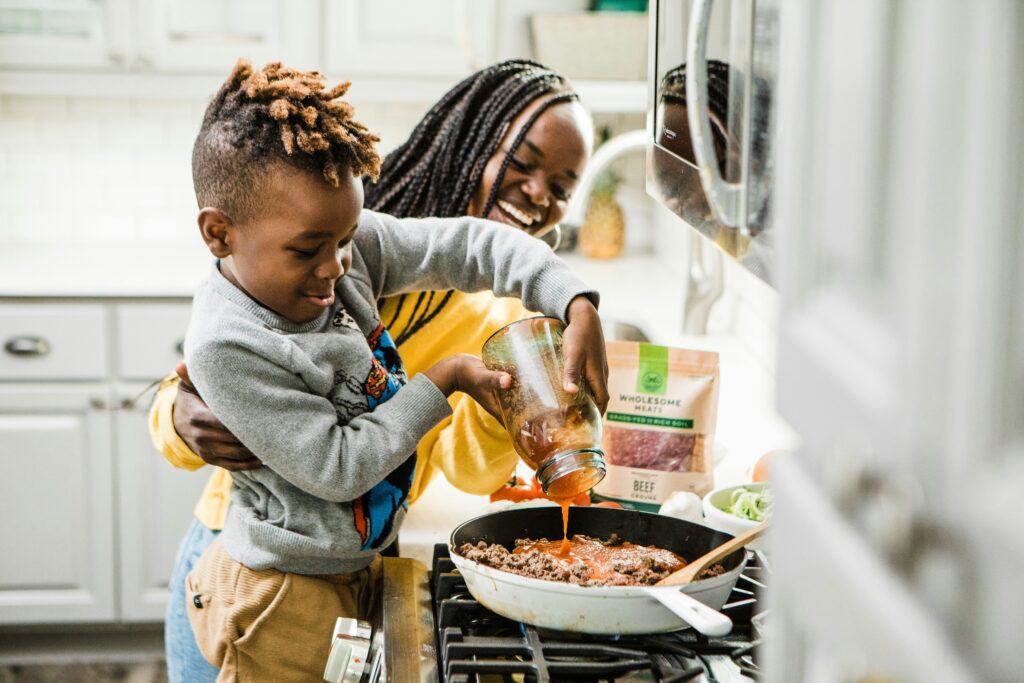
Speaking Danish with adults could sometimes feel like work. With my children, it was different. I could make mistakes, repeat myself, and try out a word I’d just learned to see whether it sounded right.
They showed me patience and unknowingly became my Danish teachers. Repeating words to them helped me remember; explaining concepts required me to understand them clearly enough to simplify.
Our daily conversations in Danish strengthened my skills over time. While they were learning their first language, I was still learning Danish. In a strange way, we were learning together.
My Mother Tongue Slowly Moved Into the Background
I didn’t fully grasp the cost of that choice at first.
Since much of our daily life was conducted in Danish, my mother tongue gradually became less dominant at home.
It wasn’t lost, but it was no longer the language we used for bedtime talks, homework, or everyday conversations.
My children understand some words and expressions, but it never fully became theirs as I once imagined.
That still surprises me sometimes. My mother tongue embodies my childhood; it’s filled with memories, family, and a feeling of home.
My children only know parts of that language. In some ways, they are strangers to something that is so familiar to me. There’s a bittersweet feeling in that.
English Became Our Bridge
English took root in my life.
It is also one of the official languages spoken alongside my native tongue in my home country, and it has gradually become a bridge connecting my children to that part of my past.
They speak English confidently, thanks to school, us, and the surrounding world.
When we visit family back home, they can usually communicate in English, even if my language leaves them searching for words.
It’s a strange trade-off, now that I think about it. I became more fluent in Danish because of my children, while they grew more comfortable with English than with my native tongue.
No one planned this; there was no family meeting deciding it would be so. It simply happened, one ordinary day at a time.
Eventually, I realised how different our reality was from what I had initially envisioned.
I Used to Feel Guilty About It
For a while, I felt guilty.
I wondered whether I had made a choice that had quietly taken something from my children.
I imagined another version of our family.
In that version, I had already arrived in Denmark, comfortable with Danish. My mother tongue remained the language we spoke at home. My children grew up speaking it naturally, just as I had.
That isn’t what happened, and I’ve had to make peace with it.
The truth is, I was doing the best I could with what I had at the time.
I was raising children while learning a language I needed for work, daily life, and finding my place in a new country.
Speaking Danish at home wasn’t a careless decision. It was a practical one.
And it helped me become more confident in a language I was still learning.
What My Children Actually Gained
When I shifted my focus from what was missing to what my children had gained, I began to see their strengths.
They speak Danish confidently, without having to consciously learn it as I did. For them, it was simply part of growing up.
They also speak English, which helps them connect with family and the wider world.
They’ve grown up understanding that multiple languages can coexist within a family. What they lack, at least not entirely, is my native language. I’ve come to accept this.
However, this doesn’t mean their connection to my roots has faded. Language is only one way to pass down culture, though we are trying to make sure they learn it, perhaps not as perfectly as a mother tongue would have been.
They hear the stories I tell about my childhood, the foods I grew up with, the music I love, and the people and places I remember.
Perhaps culture doesn’t always travel in the ways we expect; sometimes it arrives in stories at the dinner table, through a song, through food, or in a mum’s words that reveal her origins.
Rewriting the Story I Tell Myself
For many years, I saw this as a loss. My children didn’t learn my language, which made me feel I had failed to pass something vital on.
Now I try to see it differently, not by denying what was lost, but by recognising that something was gained: my children became confident Danish speakers, and I became more confident in Danish too.
We built this gradually through everyday conversations, questions, corrections, bedtime stories, and daily life.
We weren’t aware of what we were creating at the time, just talking. I think what’s most fascinating is that some of the greatest changes in our lives come not from deliberate decisions but from simple, ongoing conversations.
These moments happen quietly: a language used at home, a word repeated to a child, or a habit adopted because it makes life easier.
Over time, we realise those small choices shape something larger. My children unknowingly became my Danish teachers, and I helped make Danish feel natural for them. Perhaps that’s something to be grateful for.
If you’re raising bilingual children while learning another language yourself, I’d love to know what that has looked like in your family.
Did your kids become more fluent than you expected?
Did any part of your own language or culture get left behind?
There isn’t a single right way to do this. Sometimes, the story we tell ourselves about what we lost isn’t the full story.
Sometimes, we need to reconsider what we have built.